

 0
0  0
0 Lightning, physics, and green glass: the story behind the Rolex Milgauss ⚡️
July 2, 2026
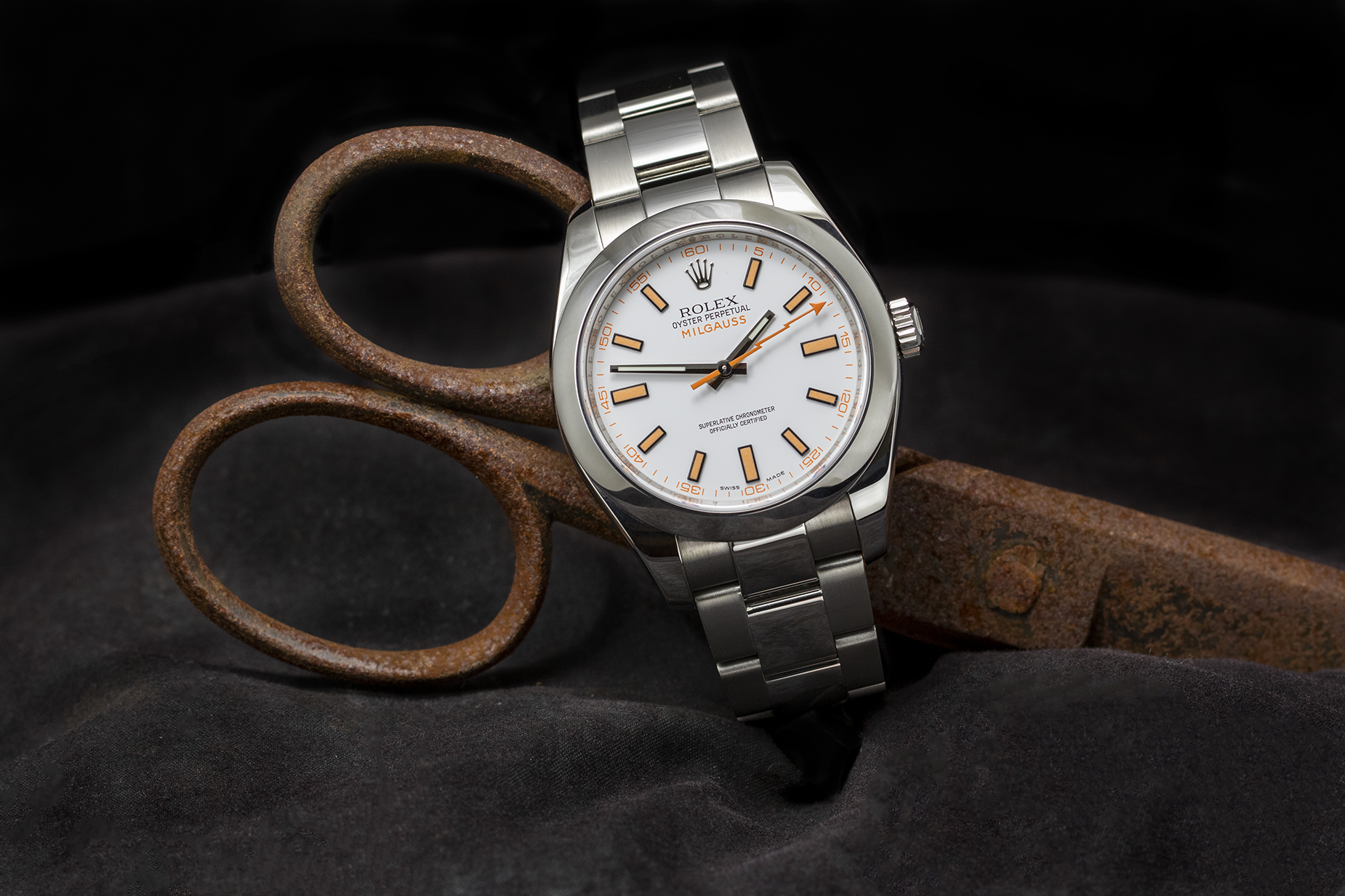
When you think of Rolex, you probably think of the chic Day-Date or the iconic Submariner. But there’s one model that always stood out a bit and flew under the radar: the Milgauss. Although Rolex recently discontinued production for good, this watch remains one of the brand’s most fascinating cult classics.
BORN IN THE LAB
In the 1950s, the emergence of advanced laboratory equipment created a new problem: strong magnetic fields that completely disrupted the accuracy of mechanical watches. The exact origins of the Milgauss are shrouded in a bit of mystery. According to a well-known anecdote, Rolex designed the watch at the request of scientists at CERN in Geneva. Although there is no hard evidence to support this, the story is certainly not impossible. After all, Rolex frequently designed watches for specific organizations at the time, such as the GMT-Master for Pan Am and the Sea-Dweller for COMEX.
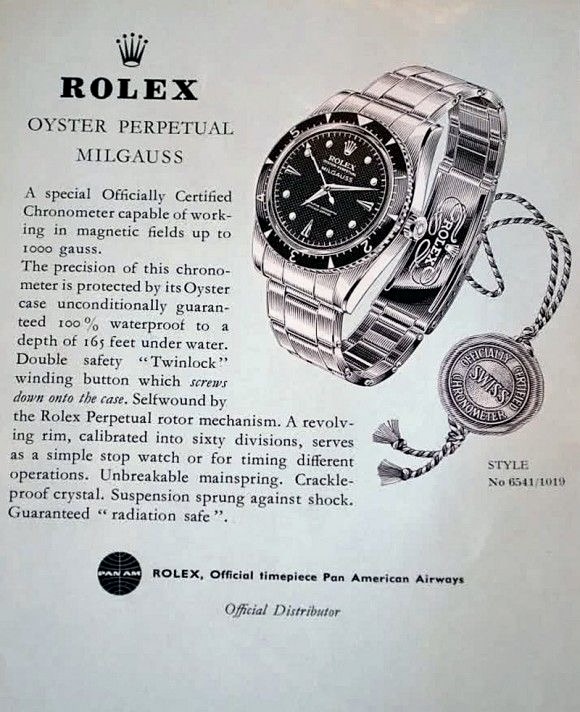
The history of the Milgauss begins in 1954 with the rare reference 6543. This model was actually tested at CERN. However, it was more of a prototype: an estimated 150 pieces were produced. Rolex determined that the watch could withstand magnetic fields of up to 1,000 Gauss. The name is therefore a direct reference to this extraordinary strength: “mille” (French for “thousand”) and “Gauss” (the unit of measurement for magnetism).
Ref. 6543 was produced for only two years and was replaced by Ref. 6541 in 1956. The launch of Ref. 6541 also marked the official start of the Milgauss collection. Commercially speaking, however, the Milgauss was a disappointment at the time. The model was particularly unlucky to debut at the same time as icons such as the Submariner, Explorer, GMT-Master, and Day-Date.
REFERENCE 1019
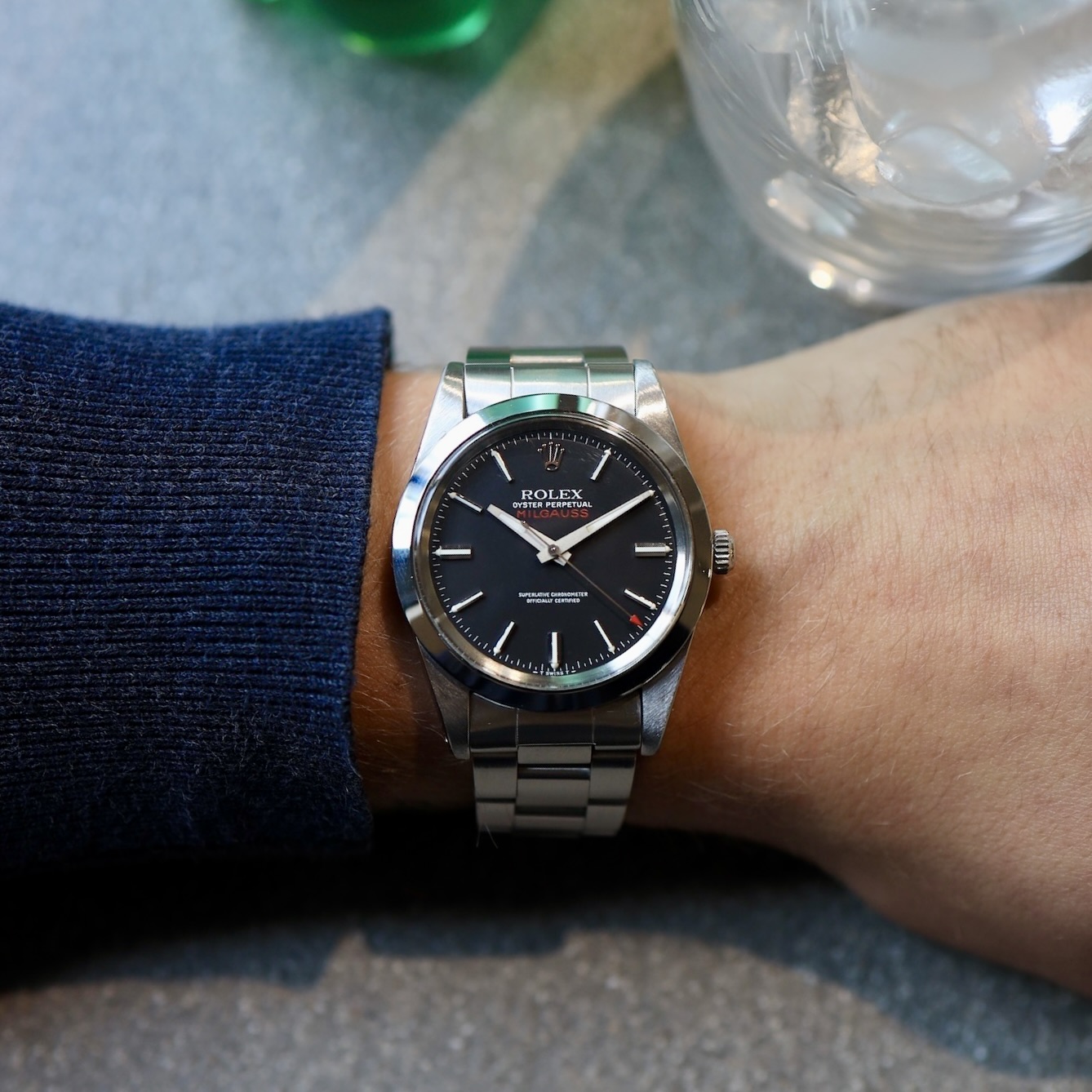
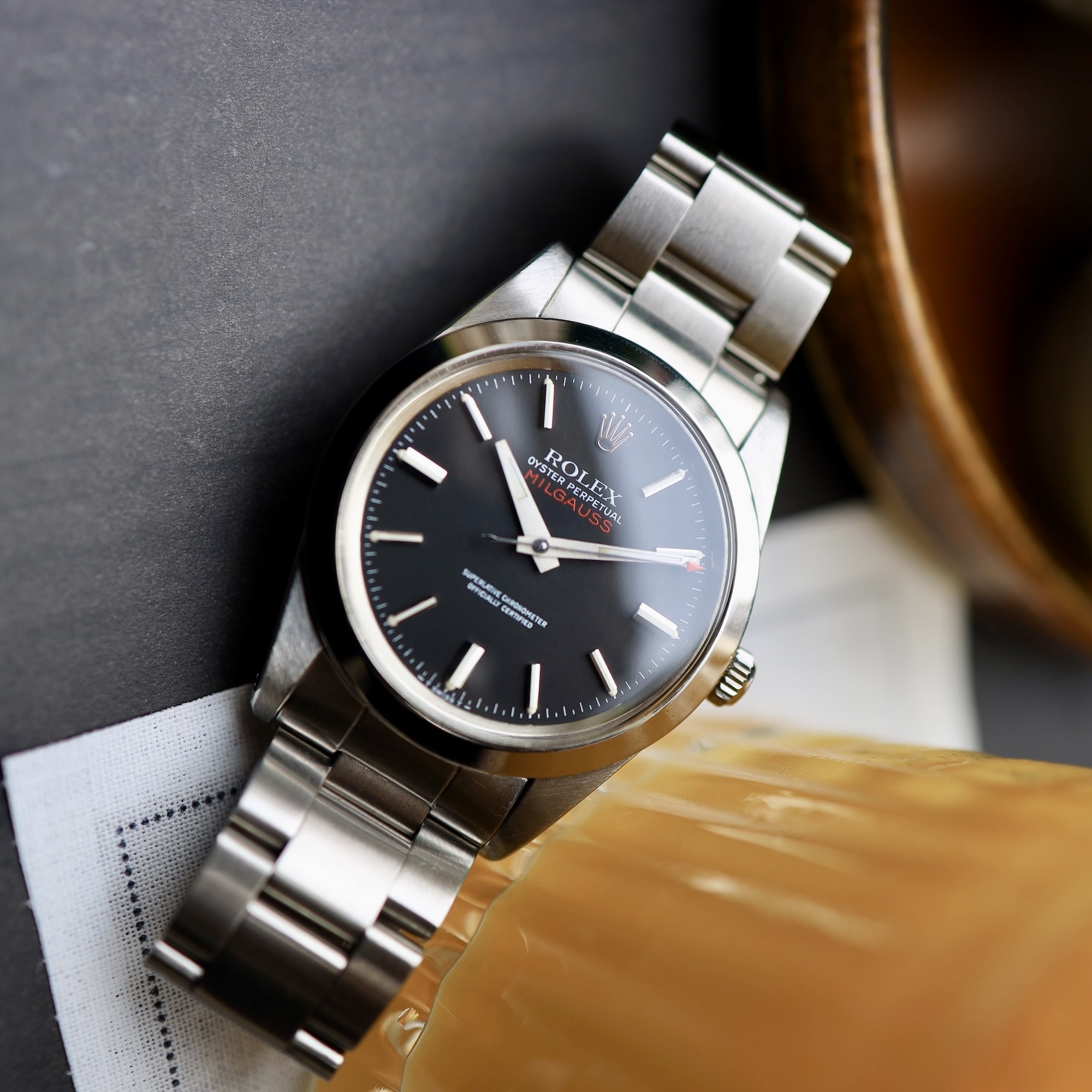
In a sort of last-ditch effort to save the model, Rolex released the reference 1019 in 1960. The watch underwent a transformation: the iconic lightning-bolt second hand and the rotating bezel were gone. Instead, the watch featured a sleek, smooth bezel, a minimalist 38mm steel Oyster case, and a straight seconds hand with a subtle red arrow tip.
Under the hood was the reliable Rolex Caliber 1580. Thanks to the internal soft-iron cage, anti-magnetic protection was guaranteed. The reference 1019 remained in production unchanged for no less than 28 years, until Rolex completely discontinued production of the Milgauss line for an extended period in 1988. Many collectors believed at the time that this marked the permanent end of the line.
THE RETURN
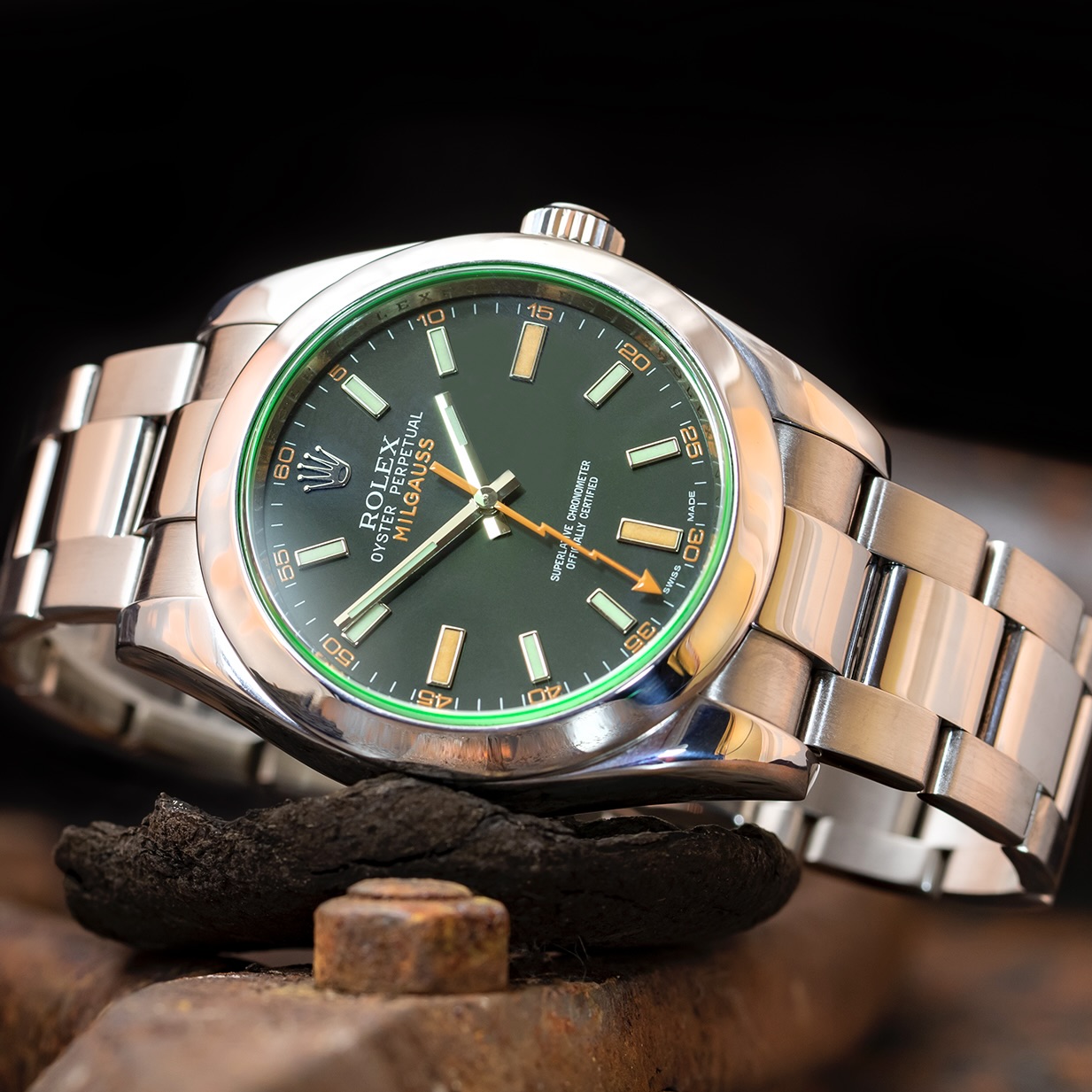
Nothing could have been further from the truth. In 2007, nearly twenty years later, Rolex brought back the Milgauss—to everyone’s surprise—with the reference 116400. This model was available in three versions and was crafted entirely from high-quality Oystersteel (904L steel).
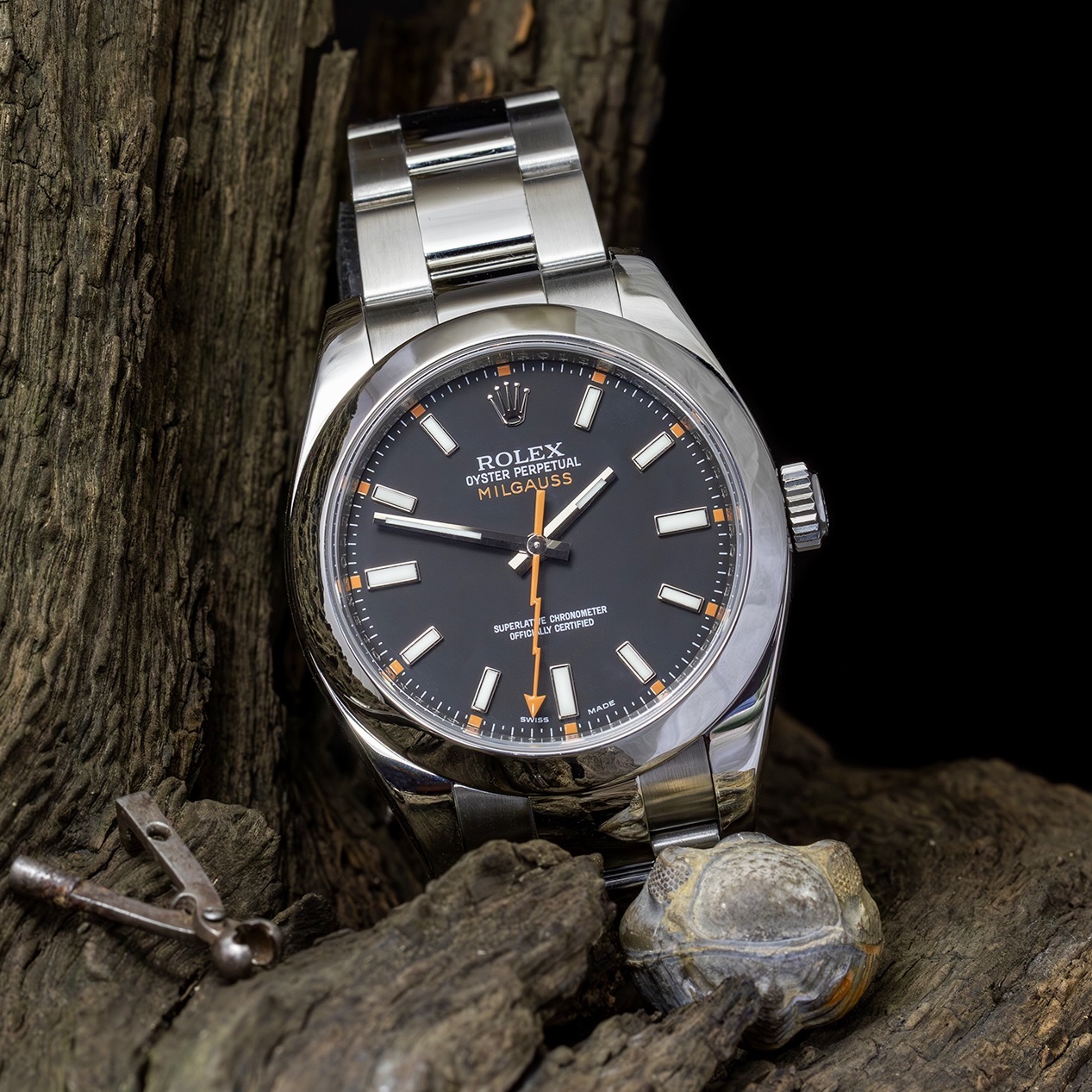
The new generation stood out thanks to a number of unique features. The bright orange lightning-bolt hand made a comeback as a nod to the original. In addition, Rolex introduced a unique green sapphire crystal (the GV models), which gave the dial a striking appearance. Later, the highly coveted “Z-Blue” dial was added: a playful and bold combination of electric blue with green glass.
THE END OR A NEW BEGINNING?
The 116400 line was officially discontinued in 2023. Because the model has been the subject of frequent rumors in recent years about a high-tech upgrade to mark its 70th anniversary, the Milgauss is now more popular than ever on the secondary market.
The Rolex Milgauss is a watch with a healthy dose of individuality and a unique story deeply rooted in particle physics. Are you ready for this ultimate individualist?
You may also find this article interesting
 Apr 9
2026
Apr 9
2026
The Rolex Wimbledon 🎾
Dec. 20
2025
A symbol of peace: the Speedmaster ‘Apollo-Soyuz’
Dec. 12
2025
Cartier Tank Pt. 2: Must-have Cartier
Jun 08
2025